
The Thinking Behind Why The Row Bags Have No Logo: A Design Language Without a Badge
Pick up a bag from The Row and the first impression is something withheld. Not a monogram print, no plaque bolted to the front panel, no oversized initial swinging from a handle. Started in 2006 by Mary-Kate and Ashley Olsen and named after Savile Row in London, the label uses that reference as a construction brief rather than decorative packaging. A Savile Row jacket is placed by cut, cloth and hand finishing rather than by a badge, and that same reasoning carries into the leather goods. Everything downstream is affected by that decision: silhouette, hardware finish, lining and the way the bags sit on the observed 2026 market. Take what follows as a design-led row bags overview rather than a shopping list, because it sets out the specific choices that carry identity once the logo has been removed.
Absence as the Argument
Removing the logo is anything but neutral, because a logo performs silent work for a handbag. It states the price bracket at ten paces, flatters the owner by broadcasting the purchase, and allows a factory to hide mediocre construction behind a famous symbol. Remove that and each of those jobs must be re-assigned to something physical. The shape must register at a distance, the leather must look expensive to a stranger who cannot name the brand, and the seams must withstand close inspection. It accounts for why the row bags are so commonly described as difficult to photograph and easy to recognise in person. The design language is a series of substitutions, and each substitution costs money that a printed monogram would have saved.
What Replaces the Monogram
Silhouette, proportion and construction are the three things that carry identification on a row bag. The outline you catch before any detail resolves is the silhouette, and it does exactly the work a logo usually does. Proportion is the outline’s internal rhythm, the relationship between width, depth and handle drop that makes tote bags collection one crescent shape look considered and another look generic. Construction is what verifies the first two once the bag is in your hands, through stitch density, edge finishing and the way panels meet. Not one of these can be added late or applied like a sticker at the end. All three are determined at the pattern stage, which is what makes the approach hard to copy and awkward to fake.
Silhouette Names the Bag
The catalogue is organised by shape names rather than seasonal collections, and buyers treat those names the way they would use a monogram. The four that anchor the line are Margaux, Park, Half Moon and the 90’s Bag, and each is a distinct geometric idea rather than a variation on a theme. The Half Moon is a shallow crescent, listed officially at 8 x 13.5 x 2.5 inches; published dimensions vary between sources, so take the figure as an official reference point rather than a settled number. The Soft Margaux 10 arrives at 10 x 7 x 7.5 inches with a five-inch handle drop, which gives it a squared, upright stance no soft hobo can imitate. The Margaux Shoulder 12 measures 14.75 x 9 x 5 inches with elongated tubular handles and narrowed gusseted side panels, making it a different animal entirely despite the shared family name. Once you learn to read these outlines and the row bag in front of you identifies itself without a word of branding.
These silhouette cues are the ones to learn first, as they recur across the line:
- Belted gussets at the sides, protective metal feet, on the Soft Margaux family
- Elongated tubular handles carrying signature adjustable buckles on the Margaux Shoulder 12
- The N/S Park Tote reads tall, narrow and upright beside the wider standard Park Tote
- A hinged frame closure and hidden adjustable strap on the Bourse Clutch
- A shallow crescent on the Half Moon, cut far flatter than the conventional hobo
The Number Is a Measurement
The second stand-in for branding is arithmetic, and here it is unusually literal. The number attached to a model name is the width of the bag in inches, not a collection code or a marketing tier. Margaux 10, 12, 15 and 17 rise in exact inches, and so do India 10.00, 12.00 and 15.75, Agnes 12 and 15, Sofia 8.75 and 10, and Marlo 12 and 14. That convention gives buyers a shared vocabulary that works without images, which matters for products that photograph almost identically across sizes. It also underlines the point of the design language, since the naming describes the object instead of dressing it up. A system that gives you dimensions instead of a story is inviting judgement on the object itself.
Two Small Stamps, by Design
The bags are not literally unmarked, but the marking is tuned to be found rather than seen. A small exterior stamp sits low on the side of the bag, sized and placed so that it disappears into the leather rather than announcing itself. Inside, a second stamp sits crisply centred, reading the logo and the words Made in Italy. The interior mark is documented on the brand’s own product pages for the Half Moon, the Soft Margaux 10 and 12, the Margaux Shoulder 12, the Bourse Clutch, the Terrasse To-Go and the Large Slouchy Banana. The placement logic is consistent with the rest of the row fashion vocabulary: the information is there for anyone paying attention and invisible to everyone else. It is branding as a footnote rather than a headline, and it is the closest the bags come to signing their own work.
Luxury Turned Inward
Hardware is where most labels make up for restraint elsewhere, usually with polished gold that catches light across a room. The Row goes the other way with palladium-plated fittings in a matte or brushed finish that refuses, deliberately, to shine. The result is metal that reads as weight and precision instead of jewellery, and it ages without the scratch map mirror-polished plating develops. Linings follow the same rule and are treated as materials in their own right rather than as surfaces for repeated logo jacquard. You will find nappa, lambskin, calfskin and cotton herringbone doing that job, including the cotton herringbone lining in the Soft Margaux 10 and the full lambskin lining in the Margaux Shoulder 12. Look at the label’s shoes and the same restraint appears, with a plain last and an unadorned toe carrying the identity, which is the plainest proof that the no-logo position is a house philosophy and not a bag-department decision.
What the Quiet Costs
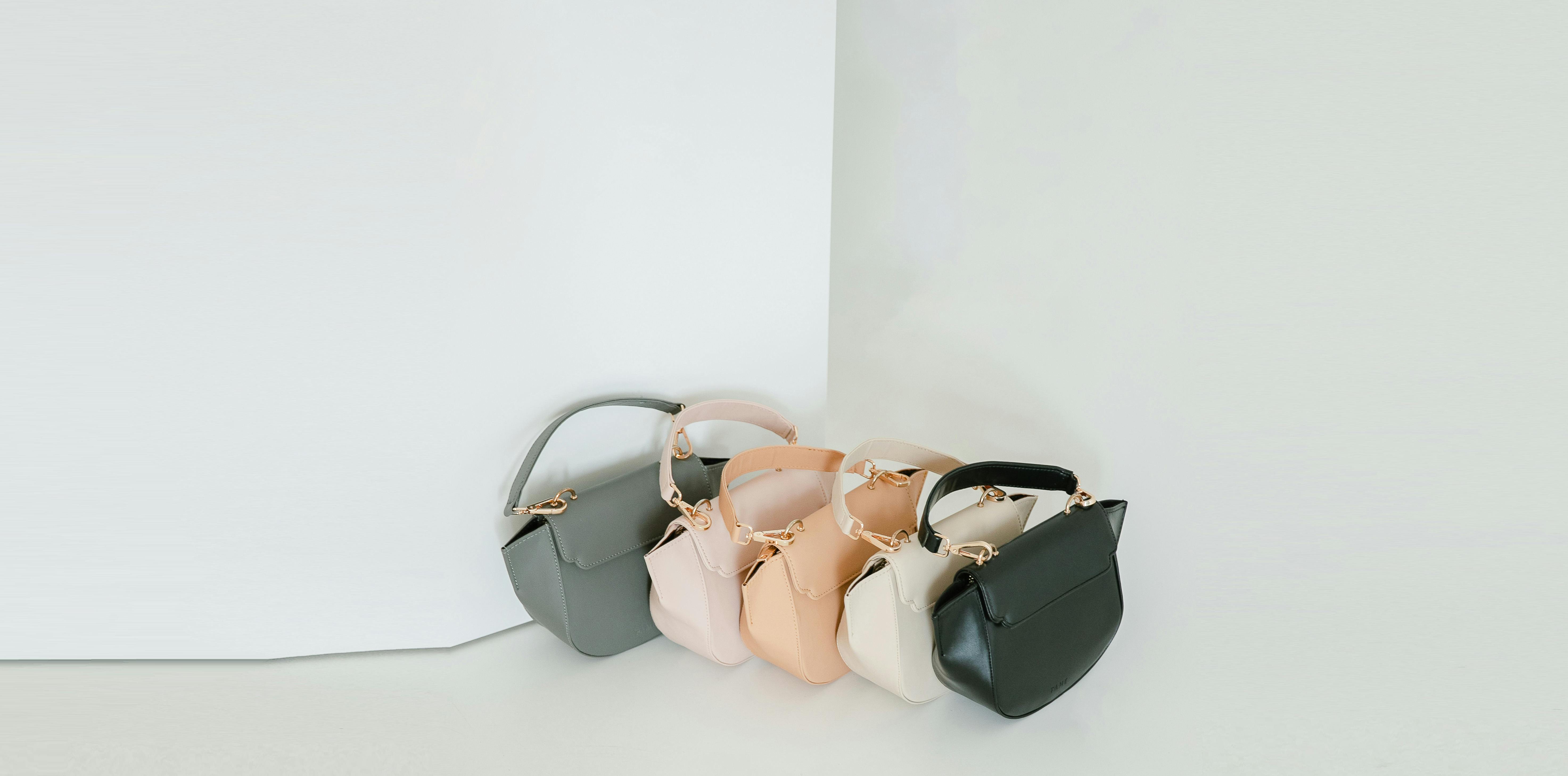
None of it is free, and the observed 2026 market prices reveal where the money goes. What a buyer pays for is pattern work, hide selection, hand-finished edges and hardware with no decorative function, and none of it produces a recognisable badge. Selling that proposition is difficult, and it explains why the range spreads unusually wide rather than clustering around a single hero price. The table below sets anchor models against the detail that identifies them in place of a logo, using observed 2026 market prices rather than an official price list, which the brand does not publish. The right-hand column is the actual branding here, so read it that way. Because the figures move with stock, region and retailer, read them as a snapshot rather than a fixed tariff.
| The model | Observed 2026 market price | What identifies it in place of a logo |
|---|---|---|
| 90’s Bag | $1,090 | A softly slouched shoulder body with minimal seaming |
| Half Moon | $1,390 | A shallow crescent cut, listed officially at 8 x 13.5 x 2.5 in |
| Bourse Clutch | $1,590 | Hinged frame closure, nappa lining, hidden strap |
| N/S Park Tote Small | $1,550-1,620 | Tall and narrow upright body, unstructured stance |
| Soft Margaux 10 | $3,650 | Belted gussets with metal feet and herringbone lining |
| Margaux Shoulder 12 | $4,900 | Tubular handles with adjustable buckles and lambskin lining |
Putting the Design Language to Work
For anyone learning row handbags at this level, the useful skill is not memorising names but learning to look in the right order. Outline first, then proportion checked against the inch number in the model name, then the seams and the edges. Hardware follows, judged on weight and finish rather than on shine, and the lining comes last, since it confirms rather than introduces. That order pays off when a row bag is offered secondhand, since shapes are far easier for counterfeits to reproduce than edge finishing and matte plating. Carry the same habits into any listing of the row for sale, where photographs flatten exactly the qualities that matter most. Learn the grammar once and the entire catalogue becomes legible, and that is what a design language without a logo asks of you.